Warning: contains plot spoilers
This novel is a great literary antidote to the sugar-coated escapism of much historical fiction aimed at women. I was attracted to it because I’m currently working on a novel set about fifty years after this one takes place.
Slammerkin narrates the misadventures of Mary Saunders, an 18th century teenage prostitute, in London and Monmouth, and is based loosely on a real person. Emma Donoghue uses Mary’s downfall to dramatise themes of inequality, double standards and the exploitation of women. And she’s prepared to go to the darkest places here, as she did in her best known novel Room, shortlisted for the Man Booker prize in 2010.

Slammerkin
The edition I read (published by Virago) is packaged with a picture of a woman in a scarlet period dress, her body cropped at the neck so her face isn’t visible (which seems to be ‘the look’ in today’s romantic historical fiction). But anyone lured by the cover into expectations of an anachronistic bodice ripper is in for a nasty surprise. The world of Slammerkin is sulphurous and visceral, revealing the heroine’s sordid sexual transactions as she plays for increasingly higher stakes – risking not only her personal and moral safety but her life too.
Donoghue skillfully drips historical detail into the narrative rather than hold the story up with lengthy description. The details are specific and evocative, and often charged with thematic resonance. Specialist historical facts about dress making, for example, help convince you of the authenticity of the setting (it presumably helps that Donoghue is a historian).
The clothes aren’t just there for decoration, however. The novel’s imagery is skillfully sewn into its thematic and narrative texture. The central symbol of a ‘slammerkin’ , meaning a loose dress or a loose woman, plays a part in the climactic sequence, and in the course of the novel represents the tawdriness and delusional nature of Mary’s aspirations as well as her vulnerability.
Mary’s fantasy of a better life and fine clothes begins when as a child she is captivated by the sight of a beautiful prostitute wearing a red ribbon. Mary’s desire to own one like it leads to her downfall. At fear of her life, she tries leave behind her dangerous existence pulling ‘cullies’ on the London back streets by escaping to Monmouth to become an apprentice seamstress. But her work conditions would count as slavery in our own times, embroidering lavish dresses for rich patrons who endlessly delay paying their bills.
It’s a brilliant irony that a dress should be the central symbol of a book about a child’s descent into degradation in pursuit of a gaudy frock, bearing in mind that the appeal of commercial historical novels centres on fantasies about ladies in fancy period costumes. Slammerkin may not appeal to every fan of women’s historical fiction but it will be of interest to readers who enjoy Sarah Waters’ earlier novels, or Michel Faber’s ‘The Crimson Petal and the White’, which has some similarities to Slammerkin.
Donoghue challenges us to think about women’s freedoms and rights then and now. Her heroine makes the point that selling her vagina is only the extreme end of a spectrum in the use and abuse of women’s bodies. Another character, (the bitter pious hypocrite Mrs Ash) sells her breasts as a wet nurse while the respectable occupation of seamstress is in reality sweated labour leading to blindness and repetitive strain injury. Even Mary’s mistress, Jane Jones, admits that being a wife makes her a kind of servant. We are shown that Mary is cleverer and more resourceful than her master but she has no opportunity to put her talents to use.
Slammerkin is a warning that we cannot take for granted the comparative gender equality of today (at least in richer countries). On the day I finished reading the novel (7 January 2014) there was a story in the news about two Twitter ‘trolls’ who admitted sending rape and murder threats to Caroline Criado-Perez (a literary reference, because Criado-Perez angered the trolls by campaigning to keep Jane Austen on the ten pound note). On the same day there was another story about the Metropolitan police promising to take the claims of alleged rape victims more seriously in future.
I can see only one two areas where Slammerkin might be improved. My wife, the writer Sally O’Reilly, felt that Mary Saunders fell into prostitution too quickly, and she thought it would have been more credible if she at least considered other options, given her native intelligence and resourcefulness. I was more willing to go along with the story, so it would be interesting to hear other opinions on this (or indeed any other aspects of the novel). Mary’s fall is certainly credible in historical terms; for example, Ben Wilson in ‘Decency and Disorder 1789-1837’ (published in 2007) explains that there were thousands of prostitutes working in the area of Saint Giles in London at that time, many of them under thirteen.
While Slammerkin is perhaps not as assured as ‘Room’ it shows the potential for historical fiction to tackle big themes and invite the reader to look at both the past and the present in a new light. The final harrowing chapter is unforgettable. I hope that the success of Room helps Slammerkin find a wide audience.
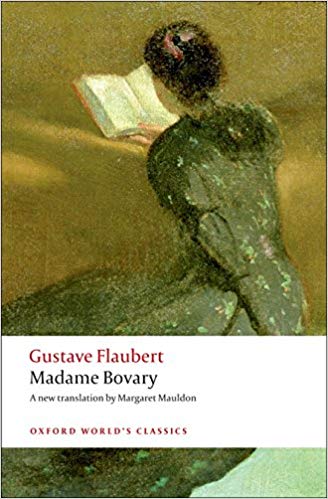
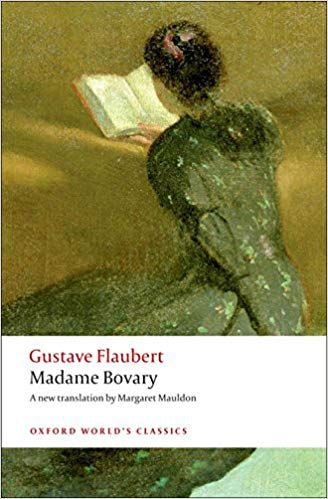 My article on ten female protagonists created by male authors was published by Readers Digest last week. I was asked to write it because the protagonist in my debut novel Wrecker, also published last week (by HQ (Harper Collins), is female.
 Fiction and other stories