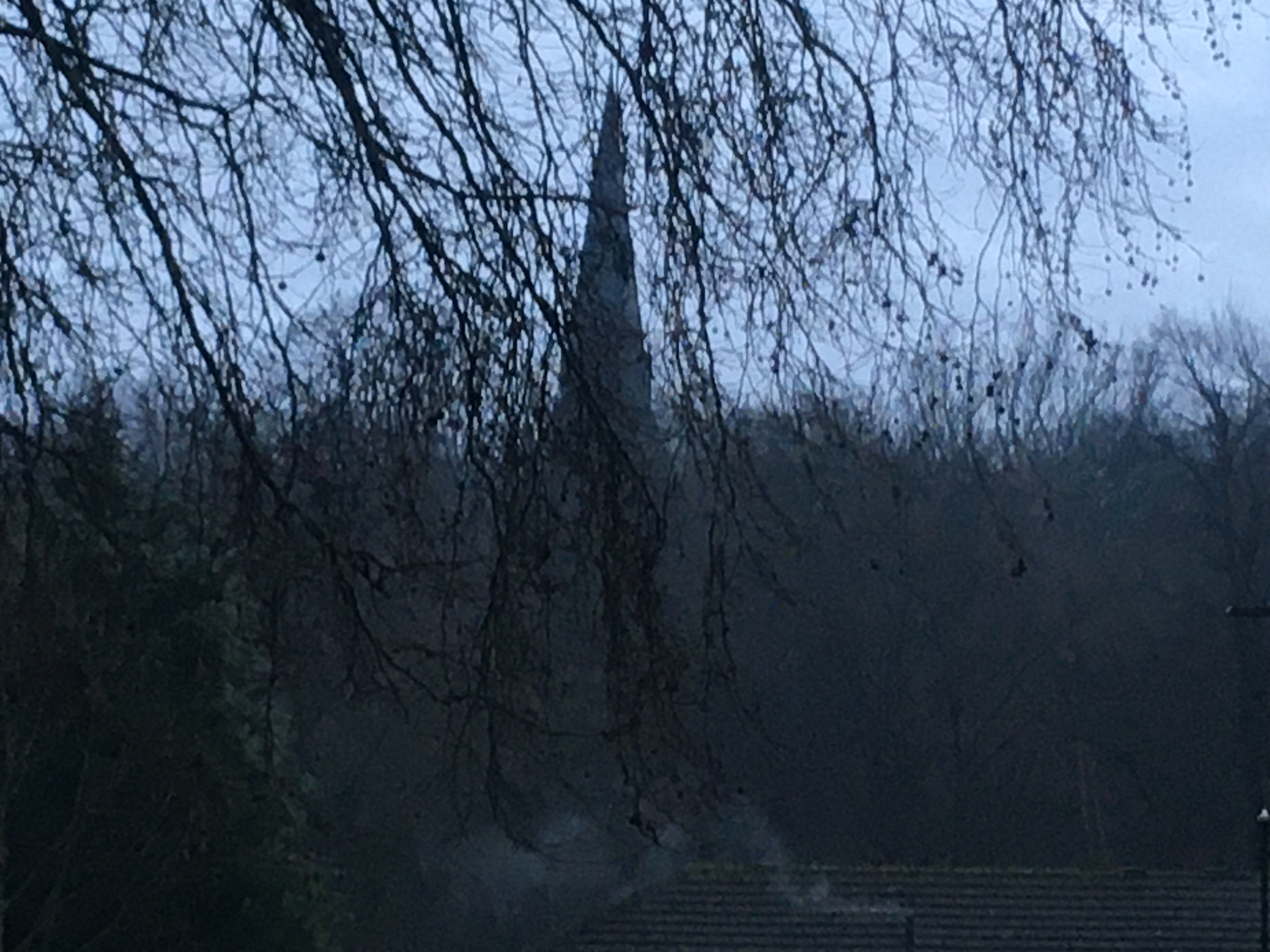
On 18th February 2023 I was on a panel discussing the ‘Gothic’ at the UK Ghost Story Festival in Derby, UK. The chair was Alex Davis and the other panellists were CJ Cooke, Alex Katie Lumsden and Sarah Ward.
The topic was: Gothic Fiction has been around for a long time, but why do so many novels in the field look to the past for their inspiration? In this panel we’ll explore why Gothic has such a close relationship with the past and how to use history in order to develop great tales in the genre.
Here are my answers to the questions raised.
1) What would you say were some of the earliest Gothic novels – either well-known or more obscure?
How we define ‘Gothic’? Its boundaries have spread beyond the tropes of the original Gothic novels.
The Gothic influence is often seen as going back at least as far as Shakespeare’s plays, particularly MacBeth and Hamlet. But the novel didn’t exist as a genre at that time – at least, not as we know it.
The Gothic novel is seen as beginning with The Castle of Otranto by Horace Walpole, published in the late 18th century. But how many modern authors are influenced directly by the original Gothic books? By Jane Austen’s time the conventions of Gothic were already sufficiently cliched to be sent up – in Northanger Abbey.
Victorian authors used Gothic effects, the Brontës, particularly Charlotte Brontë’s Jane Eyre, but also Emily Brontë’s Wuthering Heights. Other Victorian authors who used Gothic elements include: Charles Dickens Great Expectations, Bleak House; Thomas Hardy; then late Victorian/Edwardian writers: Oscar Wilde, The Picture of Dorian Gray, Robert Louis Stevenson’s Dr Jekyll and Mr Hyde, Bram Stoker’s Dracula.
There is a big cross-over with ‘Sensation’ fiction, associated with Wilkie Collins, author of The Woman in White and writers like Mary Braddon, author of Lady Audley’s Secret, who churned this stuff out. Sensation fiction shares many of the same plot devices and tropes as Gothic fiction.
However, my guess is today’s neo-Victorian Gothic novels date back to Sarah Waters’ early neo-Victorian ‘Sensation’ novels, strongly influenced by Wilkie Collins: Affinity and Fingersmith.
2) What do you think is the appeal of Gothic fiction for readers?
Gothic is similar to and shares many features with other genres, such as crime, horror and ghost stories. Even the key feature of the past haunting the present is common in other genres. Gothic has evolved past its original trappings of ancient castles and maidens locked up in dungeons. It’s not a genre as such, yet readers always know when something feels Gothic. Here are some of its features.
A safe place to explore dark fears and desires
The Gothic imagination is a safe place to confront our deepest fears. It’s often about primal fears, such as constriction and claustrophobia: being buried alive, trapped in narrow dark tunnels or dungeons, deformity, doppelgangers, the uncanny (the strangeness in the everyday, (dolls, clockwork girls). These trappings aren’t unique to ‘Gothic’ fiction, but they are a key feature of it.
The Gothic reveals the dark side of everyday normality. Look at the dark sequence in the movie It’s a Wonderful Life, where the angel Clarence Odbody shows good egg George Bailey what his home town would be like if he had never lived. He is transported to a nightmare dark inversion of the ordinary small town he has lived in all his life. But the corruption he sees is already present in the real town. This sequence influenced later directors like David Lynch to explore the dark side of the modern psyche in films such as Blue Velvet which use classic Gothic tropes. The village of Royston Vasey in Gothic TV comedy The League of Gentlemen, is a more recent dark inversion, this time of a cosy British village – only the villagers appear to be cannibals.
Nervous compulsion
Like crime and other genres, Gothic fiction works through the nerves more than the intellect. In Gothic fiction the emotional temperature gauge is often in the red. It lends itself to hysteria, melodrama, heightened reality and raised pulse rates.
It offers the ‘white knuckle ride’ of the horror and crime genres.
The allure of the unspeakable
Gothic allows us to explore our dark side. It revels in unconscious or subconscious compulsions, secrets and whatever is repressed, forbidden or illicit. In the past, women novelists were able to address themes indirectly through Gothic fiction which couldn’t be spoken of in polite society. In our more permissive times, modern writers can be explicit where the Victorians could only suggest.
Gothic has a tawdry quality and a fetishistic element. It can be a safe place to indulge impulses that are usually perhaps best kept under wraps. Even necrophilia is on the menu – think of Wuthering Heights, and Heathcliff bribing the sexton to put his body next to Catherine’s when he dies. Vladimir Nabakov’s Lolita is a classic Gothic story, which still has the power to shock and outrage. Gothic is dodgy; that’s the whole point.
Subversion
Gothic fiction appeals to readers who want normality undermined, rather than reinforced.
With Gothic fiction, the whole world is often skewed, morality becomes relative. It’s interesting to compare Gothic fiction with mainstream crime fiction. In a crime book if a woman is locked in a chamber by a sick pervert, your impulse is to hide behind your seat. In a Gothic novel, you might become complicit, as Angela Carter does in The Bloody Chamber. Queasy complicity is an element of the Gothic. Remember Nabakov’s Lolita?
Although the Gothic was developed by both male and female writers, perhaps there is something essentially ‘feminine’ about it. Unlike ‘realism’, the Gothic subverts the idea that rationality and materialistic explanations are the surest way to get to the bottom of human nature and our impulses. Gothic looks under the surface of apparent ‘reality’ or ‘normality.
In the Victorian era, it was frowned upon to discuss many topics or challenge the patriarchy (although that didn’t stop the Suffragettes). Female authors, such as Mary Braddon, author of Lady Audley’s Secret, smuggled in subversive themes that went under the radar of the pompous male critics of the time. Lady Audley is punished in the plot by being locked up in an asylum, but female readers of the time would have identified with her daring and her contempt for society’s rules. Braddon’s heroine, Lady Audley, was prepared to go to any lengths for money at a time when it was considered very unladylike. Is she the villain of the piece, or the heroine? A warning or a role model?
Superficially, crime fiction, especially books with serial killers, would seem to share ground with Gothic horror. But it seems to me the genres are fundamentally different. Crime fiction is literal minded, firmly based in fact and deductive reasoning. Good and evil are divided into two sides, although there are often blurred lines between them. The ‘sick’ psycho is outside of normality.
Do readers feel safer if neat demarcations of good and evil, the community and the outsiders, are reinforced? That might explain why Shirley Jackson’s story The Lottery caused a national sensation in America when first published, because it suggested the whole of society was complicit in evil, not just a lone psychopath – sorry, bit of spoiler there.
Perhaps Gothic fiction can plumb deeper psychological depths than realism. Charlotte Brontë’s Jane Eyre, which introduced the trope of the mad woman locked in the attic, has been reinterpreted over time. Decades before the emergence of Freud and psychotherapy, the woman in the attic offered a potent metaphor for restrictions imposed on women by the patriarchy. In the 20th century Jean Rhys’s Wide Sargasso Sea, reinterprets the story, addressing themes of patriarchy, race and empire. Both Victorian fiction and neo-Victorian fiction subvert domestic ideology, and the ideal of the ‘Angel in the House’.
Sarah Waters used Gothic elements in her novels to address sexual orientation issues.
In more permissive times (for those of us lucky enough not to live in a Theocracy or other form of dictatorship), we can revisit the past and be more explicit about themes, and also address them from the perspective of our age. There is also an opportunity to use Gothic tropes to reveal resonances between our times and a historic past, rather than just ripping off the plots and devices of Georgian and Victorian books – although that’s fun too.
Nowadays, there is the potential to explore themes of empire, colonialism, race, gender and class from new perspectives, to draw comparisons as well as making contrasts and to invite readers to reconsider handed-down selective historical narratives that are based on contestable facts and interpretations.
In The Darlings of the Asylum I was interested in looking at the politics of gender identity in the late 19th century in a way that resonates with the identity controversies of our own times. The novel’s villain Dr Rastrick’s eugenics theories and assumptions about sex and gender aren’t necessarily as historical as we might like them to be in the age of the culture wars and the ‘Incel’. The book is largely written in a ‘realist’ way, but the Gothic elements hopefully enhance the sense of mental instability and constriction that the protagonist experiences.
The camp over-the-top quality of Gothic fiction and films is another aspect of Gothic’s subversive attitude. Camp is a way to satirise, defy and poke fun at the straight world, and celebrate outsiders and ‘freaks’. Camp laughs at the Straight World’s hypocrisy and pomposity and slyly undermines the efforts of those in power keep us all in our place.
There are elements of camp in Oscar Wilde’s The Picture of Dorian Gray, in Hammer horror films of the 1960s and 1970s, and in Gothic films like Suspiria by cult Italian horror director Dario Gento.
3) Why do you think so much Gothic fiction written today takes a historical angle?
By definition the past has to play a part in Gothic fiction, even if a story is set in our times – it’s a key characteristic trope in Gothic fiction.
Here are other suggestions as to why the past plays a part.
Publishing trends
Gothic novels continue to be published because they sell – it’s market driven. Fan fiction and influencers presumably play a part in determining readers’ choices, as do Amazon algorithms. Books are marketed to indicate they are similar to previously successful novels which have sold well. The same features come up in different novels: taxidermists, clockwork girls, sleep walking, seances and young women being locked up.
My publisher insisted on putting ‘asylum’ into the title of the book The Darlings of the Asylum, so that readers who liked other asylum-based novels would want to read it. The publishing industry has to work with the reality that many readers in essence like to read the same book over and over again.
Certain strategies can help make a novel stand out, such as retelling a famous story, such as Doctor Jekyll and Mr Hyde, from a different character’s point of view, which means a novel can gain sales from fans of the original book. This also allows the author to examine the assumptions behind the original book and tell the story from a new viewpoint, such as Sally Beauman’s Rebecca’s Tale which retells Daphne Du Maurier’s novel Rebecca from the point of view of the murdered wife, Rebecca, who is dead and therefore absent from Du |Maurier’s original, yet still manages to dominate the story.
Authors can look to the past to shed light on themes in the present
With the history of empire becoming more controversial and disputed, for example with demands to remove public statues of slave traders, let’s hope that in future there will be more novels published that are written by minority identity groups and challenge the ruling elite’s version of events.
Novelists are responding to a wider interest in revisiting the historical past in other media
Novels don’t exist in a vacuum. They are influenced by TV and movie streaming platforms: Ripper Street. The Alienist, Sherlock Holmes and so on.
A note on confusion about historical periods
It seems that many readers have only a vague idea about historical periods. My first book Wrecker announces on the first page that it is set ‘10 years after the end of the French Wars’ which would make it 1825, the Georgian Age. Despite the fact that I included historical detail from the specific period in which the action takes place, most readers assume the novel takes place in the Victorian age. It’s assumed the entire 19th century was Victorian, although Queen Victoria’s reign started in 1837.
One review of Darlings of the Asylum said that the book was set ‘sometime in the 18th century’. This is despite the fact that the first page of the book sets the story in ‘Brighton 1886’ in large type. Either the reviewer missed that or thinks that the eighteen hundreds are the eighteenth century.
4) Are there particularly popular time periods that you notice get covered a lot in historical Gothic, and why do you think that might be?
The Victorians are recent enough for us to be able to identify with readily, but in fiction they are refashioned to make them ‘relatable’ to our own times. This has created the genre of the neo-Victorian novel. The world of the neo-Victorian novel has become a virtual historical period in its own right, complete with anachronisms, clichés and a perhaps fetishized preoccupation with the seamy underside of Victorian life. It risks becoming stale because too familiar. It is also increasingly overcrowded with authors, like a bustling Victorian city.
Sarah Perry’s novel The Essex Serpent, which was a bestseller, was influenced by revisionist ideas about the Victorians which debunked cliched assumptions, for example about the Victorians being stuffy and sexually repressed. The novel suggests the Victorians were more like us than we like to think.
Perry was influenced by the book Reinventing the Victorians by Matthew Sweet which debunks a lot of common beliefs, such as that Victorians covered the legs of their pianos in case they inspired lewd thoughts (although apparently they did do that in more puritanical America). It is possible, even probable, that neo-Victorian fiction tells us more about ourselves than about people in the Victorian era.
There’s an interesting debate to be had about how accurately a novelist can portray a historical era, and if and why it matters if the Victorian world depicted in neo-Victorian novels is anachronistic. If the characters in neo-Victorian novels have a modern mind set and use modern language, is it just a fancy dress show? But it is never possible to portray the past with complete authenticity. It’s easy to see anachronisms in historical TV dramas made in the 1970s, with Victorian women wearing eye-shadow and sporting 1970s hair styles, but we don’t notice the same anomalies in dramas made now. In Poldark the two leading characters were given modern hair styles because otherwise viewers would find them unrelatable.
As for other historical periods that lend themselves to the Gothic, perhaps the 17th century, the age of the witch-finders, or the 18th century as in Patrick Suskind’s very Gothic novel Perfume.
5) Do you think there have been changes in this over time? Has there been a move towards more recent history, do you think?
Here are some examples that spring to mind of the use of Gothic elements in stories set in more recent history.
AS Byatt’s Little Black Book of Stories is a collection of tales set in the contemporary world and is gloriously Gothic.
Shirley Jackson is arguably the mistress of modern Gothic fiction, and her stories are set in the contemporary world of her time: The Haunting of Hill House and We Have Always Lived in the Castle.
A common approach is to tell stories in two or more time zones, pioneered by John Fowles’ The French Lieutenant’s Woman and AS Byatt’s Possession. The Silent Companions by Laura Purcell is a recent example.
Related sub-genres:
The Folk Horror genre uses Gothic elements and can be set in our times. For example, Starve Acre and The Loney, by Andrew Michael Hurley are both set in recent decades.
Contemporary Vampire novels, such as Stephanie Meyer’s Twilight series.
Steam Punk – I’ve never read any but apparently it has Gothic elements.
And in other media:
Japanese horror films like The Ring and Dark Water are ghost stories with Gothic elements set in the contemporary world of the 1990s.
6) Do you tend to end up doing a lot of historical research when you are writing and/or planning?
In the books I’ve written so far, I haven’t focused on historical figures, so a lot of the research has been about social history rather than general history, which traditionally has been focused on the ruling elite. In my first novel Wrecker every major event was based on a record of an incident in social history or in Cornish folk history.
The lunatic asylum in The Darlings of the Asylum was based on historical evidence, and I aimed to make the medical regime as historically accurate as possible. I read history books, folk history, original asylum records, biographies, contemporary fiction and academic papers.
How much historical detail you use in a novel is an individual preference. Personally, as a reader, I’m put off when writers do a research dump. If using historical detail, make it tell. If you mention a character’s gloves or dress, make the detail relevant to their character or the story. It’s surprising how little detail you need. Penelope Fizgerald’s The Blue Flower set in 1794 has virtually no description, but is nevertheless conjures a haunting and vivid impression of the setting and period. On the other hand, there are times when a wealth of historical detail is effective. A good example is the stomach-churningly authentic description of a backstreet abortion in Andrew Hughes’s Gothic novel The Convictions of John Delahunt.
In the novels I’ve written so far, I’ve tried to make the character’s world view, values, everyday assumptions and attitudes as authentic as possible for the time in which the story’s set. I used a lot of Cornish dialect and traditional idioms. There is a risk you might take this too far so that it seems stagey or cliched.
But the language we use, the way we speak and, more broadly, the manners of a particular period shape the value and behaviour of characters. If a character thinks and talks like a 21st century person there’s a risk the drama, whether Tudor or Victorian or set in the era of the Norse invaders, there should be a good reason for this. But on the other hand, Armando Iannucci’s film of Dickens’ David Copperfield with a multiracial cast captured the flavour of Dickens’ novel well.
We can never replicate the past with complete accuracy, it’s always a facsimile. But if you want to illuminate contrasts between past and present, you won’t want your characters to speak, think and act just like us.
We’ll never know exactly how people spoke in the past. The language of historical novels is inevitably stylised.
7) How much do you feel bound to ‘real’ history? Are there ever things you feel you have to adapt slightly, or places where you have to go against the facts?
Much historical fiction focuses on the ruling elite or at least the upper strata of society, presumably reflecting the interests of its readership. When writing my novels, I wasn’t interested in writing about the ruling elite, or about specific historical figures. My novels have female protagonists, this has meant a lot of emphasis on how women’s behaviour was repressed in the Georgian and Victorian eras.
In Wrecker I wanted to capture the dynamics of a community of poor women in a remote Cornish coastal village, to show the power relationships and the ways women police each other’s behaviour. In The Darlings of the Asylum I was interested in the constraints on women much later in the century, and in who got to define and control female identity. My aim is to show how the past is different to today, while finding resonances between past and present.
Above all, I wanted to avoid the cliched snake pit asylum of horror movies and books, with patients sleeping on hay in their own urine, poked at through bars for the amusement of visitors or put in leg irons. There were asylum reforms in the early Victorian period, and a change of philosophy influenced by French asylum innovations.
I hoped that a more realistic depiction of an asylum would make the anguish of my heroine feel more real than if we were in a fantasy asylum. The Gothic effects are as much a reflection of the character’s state of mind as part of the setting.
The chief antagonist in The Darlings of the Asylym, Dr Harold Rastrick, is a fictional character, drawn from various doctors of the time, in particular Dr Harold Maudsley – although there are significant differences between Rastrick and Maudsley.
I made the lunatic asylum as authentic as possible, using contemporary records. However, Dr Rastrick is a maverick, which allowed me to depart in one or two details from the standard practice of asylums at the time. I wanted to look at how a eugenicist with strict views on female identity and a reforming zeal might behave if given enough rope.
In general terms, I think going against the facts is fine if you’re writing an alternative history but problematic if you’re writing a realistic history. You can reinterpret the motives of historical figures, but it seems bad faith to change the facts about what they did. Hilary Mantel developed a successful approach in Wolf Hall, sticking to fact but reinterpreting the motives of Thomas Cromwell.
A point on ‘real history’
If I were to write something set, say, in the Elizabethan age, I’d be interested in moving the centre of focus away from the English court. The fact that in Britain we still call it the ‘Elizabethan Age’ is revealing, putting the English ruling elite at the centre of the geopolitical struggles of the time, when in fact the Spanish Empire was in the ascendancy and the Reformation was in full swing in Europe.
It would be interesting to write novels giving agency to the indigenous people of South America in that time, or the natives in the Caribbean or African slaves in the era when the slave trade was getting underway. But perhaps conservative readers of historical fiction would struggle to relate to such revolutionary notions. For some readers, the idea that the achievements of the British empire can be questioned is an outrage. For many readers, revisiting a familiar beloved historical era is what draws them to historical fiction.
But that may change, as history is constantly being reinterpreted. For writers of historical fiction there is mileage in challenging myths about the past and how they’re used to justify policies and actions in the here and now. A novelist has the opportunity to ask what ‘facts’ are selected and emphasised in our history, and what facts are left out – and why.
We shouldn’t forget that some dictators would like to burn all the books from the past that questioned their version of history. Some have even wanted to establish a ‘Year Zero’ where all the histories of the past are wiped from the people’s memory. While we write books to entertain in the main, their lessons are potentially deadly serious.
8) Do you think the superstitions and beliefs of the past help make history a fertile ground for Gothic writing?
Many writers plunder the past for story ideas, often putting a new spin on old traditions.
In Wrecker, my protagonist, Mary Blight, is someone who believes in a spirit world and is seen by her neighbours as a kind of sea witch. She communes with the dead and uses charms. In the opening scene we see her on a misty beach plundering corpses for valuables after a shipwreck. She hears the voices of dead shipwreck victims of the past speaking in their own tongues. Later she ties a live bird to the ceiling of her cottage to save the life of a drowned man she has rescued, believing that as the bird dies, its vital forces will be transported into the man and save him. In another scene, she uses a spoken charm to discover the identity of her future husband, and levitates as she chants. Or so she believes.
In my second book, The Darlings of the Asylum, the patients in the asylum believe in old Sussex superstitions about barrow wights, huge dogs with flame-red eyes, headless stallions that run through the wood at night, ‘stink pits’ and haunted water holes, as well as believing that epileptics are possessed by the devil.
The protagonist, Violet Pring, a thwarted artist, later incorporates these nightmare creatures into surreal paintings she makes while hypnotised by a French psychiatrist.
The story is set in a converted country house, and there is a tradition among patients and staff that the house was haunted and that the original building has been incorporated into the old one. This could be read as a literal haunting or as a metaphor for science and rationalism replacing old folk beliefs in the supernatural – or both.
9) Are there any books you can think of that you’d recommend that take a more modern approach to the Gothic?
What do we mean by ‘modern’? I suggest there are two things we need to distinguish here:
- Novels in a contemporary setting with Gothic elements;
- Novels that take modern approaches to the Gothic but are set in the past.
Here are my suggestions for novels with an original approach to the Gothic.
Vladimir Nabakov’s Lolita.
Shirley Jackson’s The Haunting of Hill House and We Have Always Lived in the Castle.
Books in the ‘Folk Horror’ genre – e.g. Andrew Graham Hurley’s Starve Acre and The Loney.
Angela Carter’s short stories in The Bloody Chamber
AS Byatt’s Little Black Book of Stories.
Never Let Me Go – Kazuo Ishiguro
The Secret History – Donna Tartt
Shadow of the Wind – Carlos Ruiz Zafon
The Wasp Factory – Iain Banks
Possession – AS Byatt
10) Any final words of advice for any aspiring Gothic fiction writers out there?
It’s impossible to advise on what novelists should do to ensure they get published as the goalposts move all the time.
If you want to write fan fiction, write fan fiction.
If you want to use writing to explore where your imagination will lead, then read a range of fiction and keep an open mind.
Join a good writing group.
Go to a good writing class. I went to classes run by New Writing South.
 My article on

 Fiction and other stories