My novel ‘Wrecker’ came out in paperback last week, so this seems a good moment to explain why and how I came to write the story.
So what’s ‘Wrecker’ about?
‘Wrecker’ is a wild and stormy tale, dark and gothic, full of dramatic incident and intensity. It tells the story of Mary Blight, a feisty young woman who refuses to stay in her place and risks all to get what she wants.
At the beginning of the story, we don’t see her in the best light as she pilfers from corpses washed up on the beach after a shipwreck. But Mary is desperately poor, grinding out an existence in a remote village on the Cornish coast and grasping at any little luxury within her reach – coins, trinkets or clothes.
Mary’s life is turned upside down after she rescues a stranger who washes ashore, strapped to a barrel. Gideon Stone is a charismatic Methodist preacher, who decides to build a chapel in Mary’s village, Porthmorvoren.
Mary becomes obsessed with Gideon and this turns her neighbours against her and brings her misdeeds to the attention of the great and the good, ultimately putting her in mortal danger.
Where is the story set?
The action takes place in the fictitious village of Porthmorvoren in Penwith, West Cornwall. It is located somewhere between Newlyn and Land’s End, but you won’t find it on any map. Porthmorvoren is an amalgam of several villages I visited on Cornish holidays, including Mousehole, Port Issac, St Ives and Newlyn. The haunting atmosphere of the ruined and deserted village of Port Quin on the north Cornish coast was also an inspiration.
What gave me the idea of writing a book set in historic Cornwall?
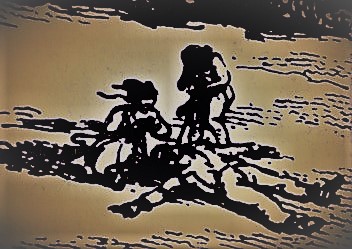
On holiday in Cornwall I saw a picture on the cover of a book called ‘Lost Cornwall’ by Joanna Thomas. It showed a young girl carrying pails of water down a lane in gritty nineteenth century Newlyn. As I read about Cornwall’s past, the remote setting, the pagan superstition and wild Cornish coastline all convinced me to begin a story about wrecking, poverty and betrayal.
I didn’t want to portray a corny picture-postcard version of Cornwall, as I explained in an article in Historia magazine. The Cornwall of ‘Wrecker’ is dark, gritty and gothic.
In a way the most important character in the novel is Cornwall itself – the heroine Mary Blight is a kind of spirit of historical Cornwall, embodying its characteristics, for example, distrust of ‘uplongers’ (outsiders), rugged individualism, a sense of closeness to the land, and what has been described as Cornish ‘fire and urgency of soul’.
Belatedly, I discovered ‘Wrecker’ belongs to a tradition of fiction set in Cornwall – Winston Graham’s Poldark novels, and numerous mass market fiction writers, notably Rosamunde Pilcher who sold more than 60 million copies of her romances.
While I was researching the novel, I also discovered that Wrecker’ is a belated example of a 19th and early 20th century literary subgenre of books about Cornish wreckers and Methodists.
Is ‘Wrecker’ based on real events?
All of the events happened somewhere at some time in Cornwall, but the story is entirely original.
For example:
Mary Blight discovers a dead woman, a shipwreck victim, has had her ear lobes chewed off. This was inspired by a documented incident in the Scilly isles where a woman chewed off a woman’s ear lobes to steal her earrings.
A man is washed ashore lashed to a barrel. This is based on an event in Port Isaac in the early twentieth century. A fisherman who couldn’t swim was saved by his workmates in this way when his boat began to sink. Sadly, his mates all perished.
Two characters are stitched together by a seamstress during a Methodist chapel meeting to expose them as adulterers. This is based on a documented incident in the 19th century when a woman sewed two young people together to punish them for flirting during a service.
Mary Blight – what are you like?
Anyone who feels constricted in their life, and sees others enjoying luxuries and freedoms that are out of their reach, should be able to relate to Mary. She is:
- Based on an archetype of a headstrong, proud, impulsive young woman;
- True to herself – not a hypocrite;
- Someone who baulks against poverty, and also struggles against social and gender constraints;
- Wily and resourceful;
- A woman who speaks her mind and has a sharp tongue, which makes her enemies;
- Transgressive, sexually assertive, a seductress;
- A pagan at heart, who sees the world through different eyes to us, believing in pagan superstitions and using charms.
During the story Mary changes. She is ‘born again’ under the influence of Gideon Stone, and her conscience is pinched about her past misdeeds in the same way her toes are pinched in the boots she has stolen from a corpse.
What were my influences?
Surprisingly perhaps, I wasn’t influenced by Daphne Du Maurier, as I had not read any of her novels. Perhaps I should have read ‘Jamaica Inn’ and ‘Frenchman’s Creek’ but I didn’t get around to it. After ‘Wrecker’ was published in hardback, I read ‘Rebecca’ and was hugely impressed with it, especially the way Du Maurier draws us into complicity with the unnamed narrator.
The main influence for ‘Wrecker’ was Thomas Hardy’s novels, especially ‘Tess of the D’Urbervilles’ and ‘Jude the Obscure’.
What gave me the idea I could write a novel from a woman’s point of view?
I did not set out to tell the story from Mary’s point of view. However, Mary’s voice was too compelling to ignore and telling the story from her point of view helped to focus the narrative.
Many male writers have written convincingly about female characters and vice versa. They include Flaubert, Tolstoy, Henry James and Jeffrey Eugenides, and I have written and an article about this.
Ideas about gender are currently being hotly debated. Perhaps Simone de Beauvoir’s famous quote should have the last word: ‘One is not born but, rather, becomes a woman.’
Does ‘Wrecker’ resonate with today’s world?
The novel touches on the position of women in society, social justice, crime and religion. Mary is caught in a toxic melting pot of stifling conformity, social injustice, increasing class distinctions, the rising consumer society.
The context of the British empire and the morally questionable basis of its wealth and power remains relevant to today’s Britain, convulsed by arguments about Brexit driven in large part by myths about our national history and nationalistic ideology.
What are the themes of ‘Wrecker?’
The title ‘Wrecker’ is metaphorical as well as literal, inviting the reader to ponder who or what is the real ‘wrecker’ in the story. Is it Mary Blight or Gideon Stone, or is the wrecker an abstract notion such as love, injustice or even stifling and repressive conformity?
Love is clearly a theme – the story is largely driven by Mary’s attempt to get Gideon to acknowledge his unconscious feelings for her. There are other competing forms of love in the story too, the ‘perfect love’ offered to the faithful in the life to come, and love of kin.
While most historical fiction tells the story of the great and the good, I wanted to tell the untold story of a poor person, a face in the crowd, putting her actions in the context of the time in which she lived. The novel imagines how poverty can drive people to dark deeds, and shows the double standards between the better off and the poor.
Religion is another theme in the novel. I aimed to give a balanced view of the impact of Methodism in Cornwall. On the one hand, the novel shows Methodism as a positive force, for example in helping to allow women a social role outside the home, and helping the poor aspire to a better life. On the other hand, Methodism can be seen as an instrument to keep the poor in order, sober, self-reliant and firmly in their place. Another theme is the danger of religious certainty. Gideon Stone’s fundamentalism and messianic zeal make him blind to his own underlying motives and reluctant to take account of the flaws in his character.
‘Wrecker’ is sympathetic to women who want to raise their social station and assert their independence, and it shows women helping each other. However, the story also shows women can compete against and hinder each other, especially in their traditional role policing the morals of small communities and shaming offenders to comply – sometimes in very nasty ways.
How historically accurate is the story?
I avoided the clichéd myths about wrecking such as ‘false lights’ and the drowning of survivors for which there is no documentary evidence. Wrecker also shows the other side of the story, how the forerunners of today’s lifeboat service tried to rescue people, usually at great risk to themselves.
Mary Blight’s actions may resonate with modern women, but I tried to make her a woman of her own time in the 1820s. People think of the 19th century as the Victorian era but Victoria came to the throne in 1837. In Mary’s time, pre-marital sex was common and women were often pregnant when they married. The preoccupation with ‘fallen women’ came about later in the century.
How did I research the book?
I used many books and websites to research Cornish social history, but three formed the bedrock of my research:
- Cornish Wrecking , 1700-1860, Reality and Popular Myth (2010), by Catherine Pearce.
- Cornwall and its People (1945), by AK Hamilton Jenkin.
- A History of Cornish Methodism (1967), by Thomas Shaw.
‘Wrecker’ is published by Harper Collins HQ and available in Waterstones, WH Smith, independent bookshops and online in print, audio and digital formats.
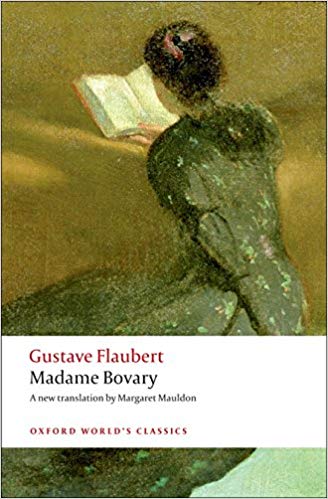
 My article on

 Fiction and other stories